We train nursing professionals who can play important roles in public health, medical, welfare and rescue situations in Japan and abroad.
Our goal is to train human resources who can play a leading role in public health, medical, and welfare fields in Japan and abroad after completing 4 years of education. In addition, we want them to be able to contribute to the development of nursing education/research in the future.
The graphic display below shows the 5 principal concepts of our education system.
“Human beings”, the subject for nursing, live a life by interacting with the “Environment”. We do various activities to maintain,promote and recover our “Health”.
“Nursing” and “Red Cross” are the elements to create desirable health conditions.
The College adopts a wedge-shaped education curriculum that integrates liberal arts, specialized fundamental, and specialized subjects based on the 5 principle concepts, rather than individually teaching them. This style allows students to start learning nursing specialty areas from the first year, and put more emphasis on these areas step by step.
The principal concepts that comprise the curriculum are “Human beings”, “Environment”, “Health”, “Nursing”, and “Red Cross”.
“Human beings”, the subject for nursing, do various activities to maintain, promote and recover our “Health” by interacting with the “Environment”. “Nursing” and “Red Cross” are the elements to create desirable health conditions.
The curriculum is designed to meet the 5 principal concepts.
A human being is not only a biological creature but also a life form living with unique identity in a society. You learn “Human beings” comprehensively in biological, psychological, spiritual and social aspects.
You learn external environments that markedly influence human health. You learn natural environment, physical and chemical environment, human environment, socio-cultural environment in relations to health.
Health is a state of maintaining dynamic balance in the internal environment of the body and living a fulfilling life using one’s ability, regardless of the presence or absence of disease/illnesses or impairment. You learn “Health” comprehensively in physical, psychological, spiritual and social aspects.
Nursing is an activity to help people be healthy by acting on “Human being” and “Environment”. You learn expertise, skills, and attitude required for this activity.
The Red Cross is an international organization whose humanitarian mission is to protect the lives, health and integrity under any circumstances. You learn about its philosophy and practical activities.
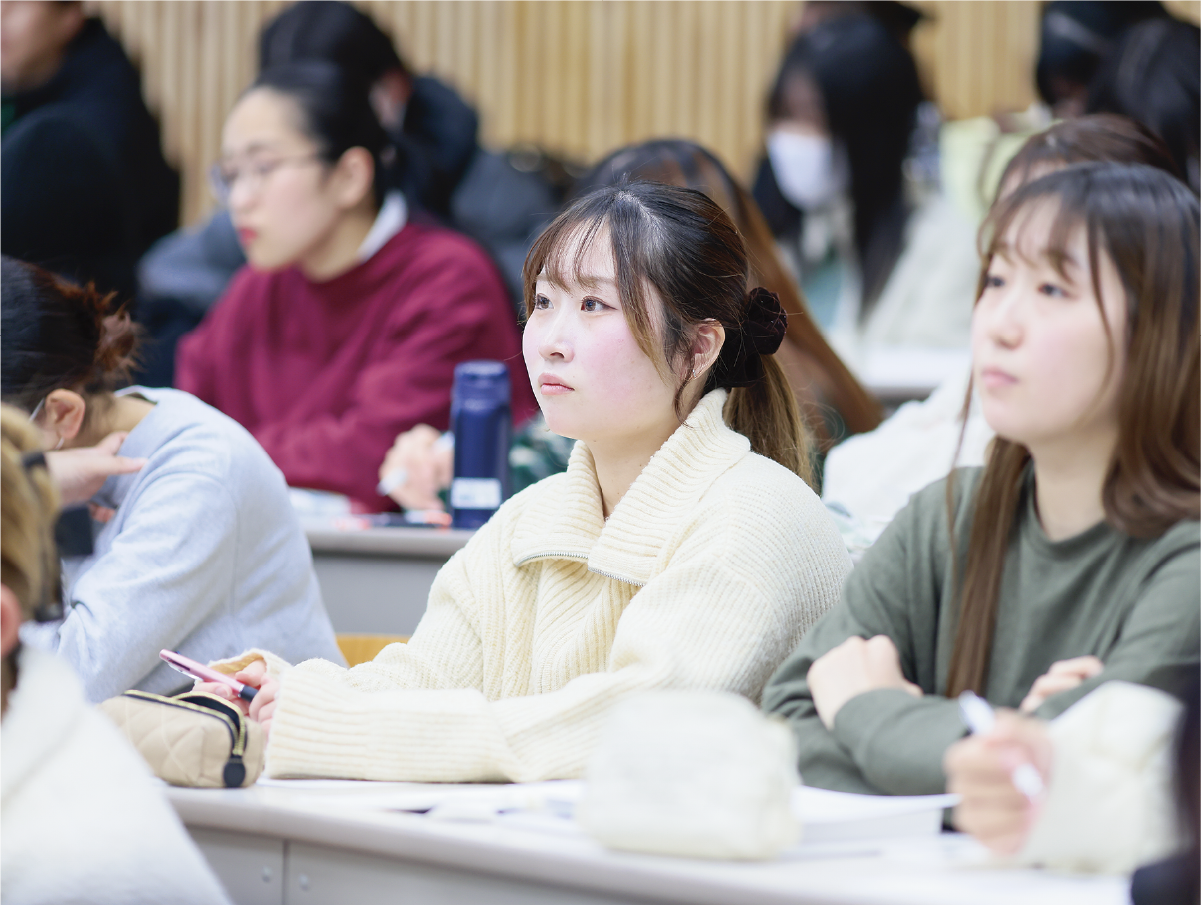
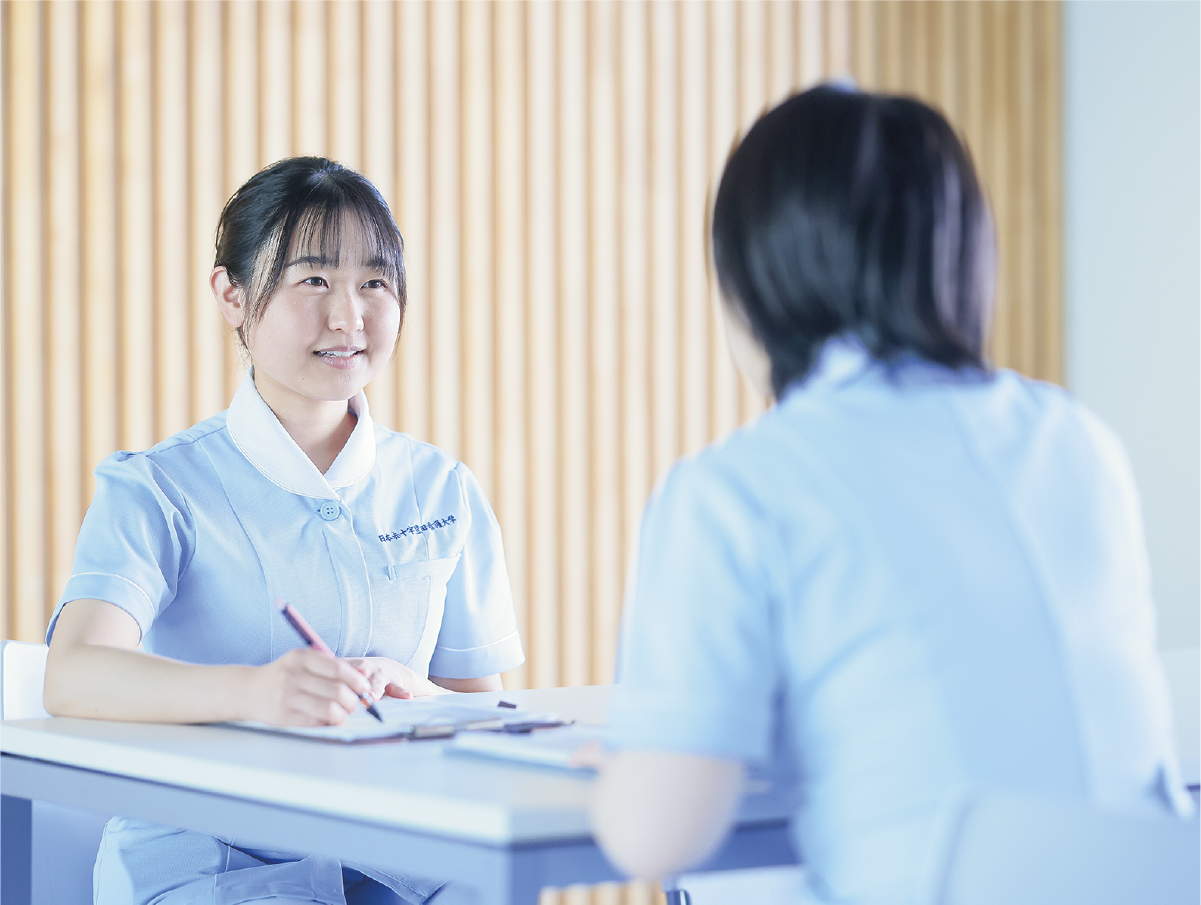
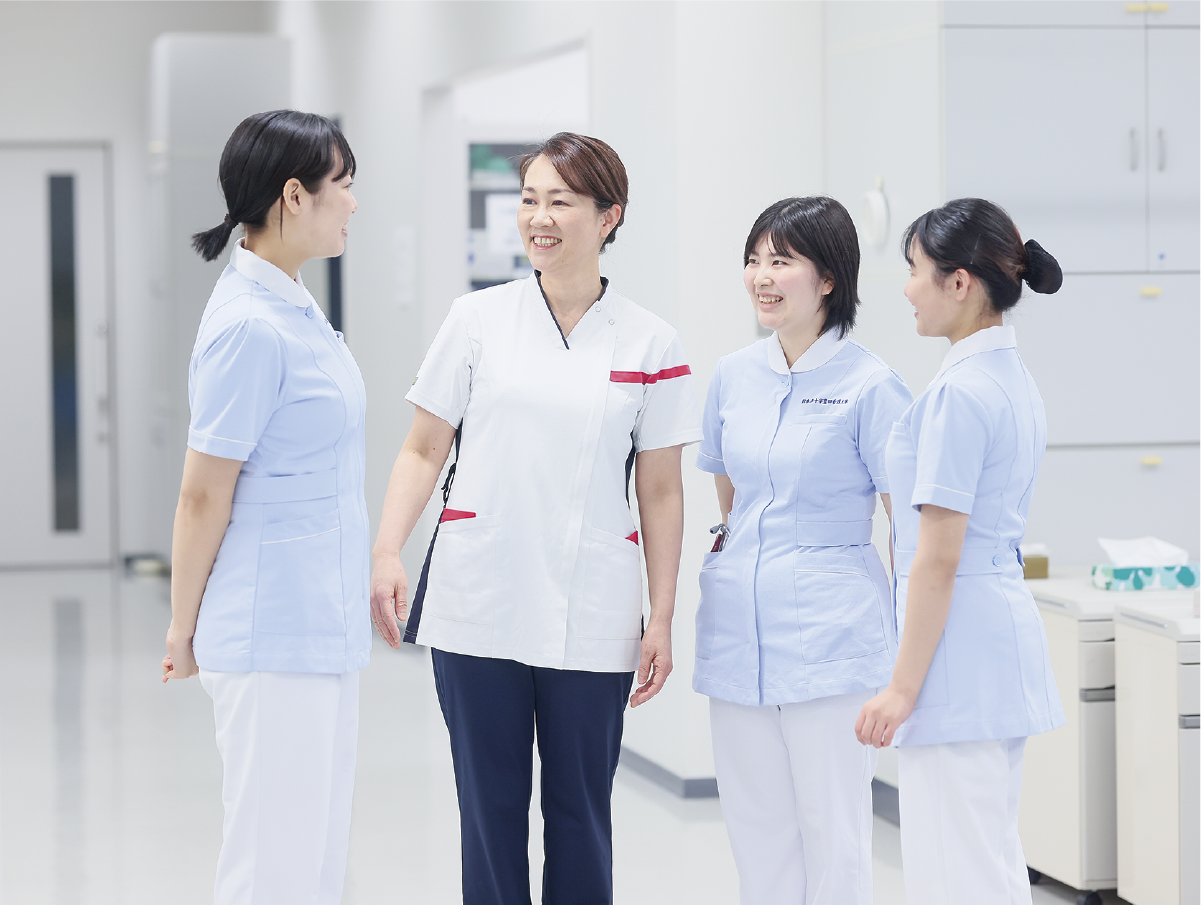
The curriculum is comprised of 5 principal concepts.
“Human beings”, the subject for nursing, do various activities to maintain, promote and recover our “Health” by interacting with the “Environment”.
“Nursing” and “Red Cross” are the elements to create desirable health conditions.
Clinical practicums help students acquire competencies through caring for people requiring nursing.
Clinical practicums are indispensable for the learning of nursing. During each practicum, students should use and improve the knowledge and skills they have acquired through in-school learning in actual long-term care and living environments.
Facing these problems, students will realize that nursing targets human beings each of whom has a personality.
This practicum helps students become able to consider more appropriate nursing support for each patient through the observation of nursing to support the daily lives of people receiving long-term care in hospitals and experience of actually providing part of such support.
With advice and guidance, students reflect on their experiences, and understand the purpose and significance of each nursing behavior.
This practicum nurtures students’ basic competencies to develop the nursing process while understanding each patient as a person, making the most of the knowledge they have acquired through the
This practicum promotes understanding of nursing specialty and roles in medical, public health, or welfare teams through the shadowing of supervisors in nursing settings, such as medical facilities and communities. It also nurtures insights into nursing management and activities through collaboration with nursing managers and nurses exclusively engaged in organization-wide activities.
This practicum promotes the learning of nursing practice performed in treatment for patients with acute and chronic diseases, and understanding of nursing functions and roles in operating rooms, ICUs, and other sections, such as palliative care, chemotherapy, and dialysis rooms.
This practicum promotes understanding of health problems during adulthood, and nurtures competencies needed to perform nursing practice for patients and their families according to the former’s health stages. It also nurtures competencies needed to perform nursing practice for patients and their families, in order to identify and resolve health problems in patients with acute conditions.
This practicum promotes understanding of health problems during adulthood, and nurtures competencies needed to perform nursing practice for patients and their families according to the former’s health stages. It also nurtures competencies needed to perform nursing practice for patients and their families, in order to identify and resolve health problems in patients with chronic diseases.
This practicum promotes understanding of elderly with health impairment and their families, and nurture basic competencies to support such people to lead an independent, fulfilling life according to their conditions through nursing practice. For this purpose, students will develop the nursing process for elderly in hospitals or health care facilities for the elderly.
This practicum promotes understanding of support for elderly living in long-term care and welfare facilities and their families. and the former’s living conditions, and the learning of the characteristics and methods of nursing in care facilities.
This practicum promotes understanding of the living and health conditions of clients (those receiving long-term home care and their families), and nurtures basic competencies needed to provide nursing support for them. It also provides insight into the utilization of public health, medical, and welfare service systems and collaboration in home nursing.
This practicum nurtures basic competencies to support pregnant, parturient, and puerperant females and newborns to maintain, promote, and recover their health while considering their family relationships through nursing practice. It also nurtures competencies to consider appropriate lifelong health support for females through actual maternal and child health promotion activities.
This practicum promotes understanding of clients during childhood and their families through support, and nurtures basic competencies to perform individualized nursing according to developmental and health stages.
This practicum helps students establish therapeutic relationships with people with mental disorders and their families, with an understanding of the meaning of coping experiences for them, and deepen their self-insight by observing this process. It also nurtures basic competencies to identify mental health-related challenges faced by patients, and perform individualized nursing practice to address these challenges.
This practicum helps students structurally understand the characteristics of communities and health-related challenges, and practically learn how to develop activities to resolve/improve such challenges. Specifically, students will learn about the basics of community-based health promotion activities, such as the process of developing a PDCA cycle, a shift of focus from personal to community challenges, collaboration and cooperation with those involved, and the establishment of community-based care systems, through practical activities in practicum facilities.
To complete all required nursing practicums at the College, students should identify health problems with a holistic understanding of patients, provide nursing care integrating the knowledge and skills they have acquired through previous learning, and deepen their understanding of the originality and specialty of nursing in the specialty areas they aim for.
We Train Nursing Professionals Who Can Work in Domestic and International Health, Medical, Welfare, and Relief Settings
Our goal is to foster individuals who, after completing 4 years of nursing education, can demonstrate leadership in the health, medical, and welfare fields, both in Japan and overseas, and who will help to advance future nursing education and research. Our curriculum allows students to start studying specialized areas of nursing in their first year, and it is designed to progressively increase the emphasis on these areas.
Public health nurses collaborate with government agencies to provide health education, counseling, vaccinations, and health checkups aimed at maintaining local residents’ health and preventing disease. They also promote overall community health by providing support to the elderly, pregnant women, and children. In recent years, these nurses’ scope of practice has expanded beyond government agencies to include roles such as industrial health nursing through the management of employee health in companies. By completing the required subjects for the National Licensing Examination for Nurses and the subjects of the Public Health Nurse Education Program, students can become eligible to take the National Licensing Exam for Public Health Nurses. Our university offers a Public Health Nurse Education Program. For interested students, we conduct an internal selection exam in the second year to determine the 22 students who will enroll in the program.
Specialized Basic Subjects, Liberal Arts, Nursing Management, Basic Nursing, Adult Nursing, Disaster Nursing, Gerontological Nursing, Home Care Nursing, Maternity Nursing, Child Health Nursing, Mental Health and Psychiatric Nursing, Public Health Nursing



